Winery software · Canada
From the block to the bottle, and the club shipment after it.
Every bottle keeps its vineyard block, its vintage and its varietal composition — through the press, the barrel room and every blend — and ships to your club with the paperwork already right.
What it covers
Winery software, area by area
BrewCraft is winery software for Canadian wineries, from the vineyard block to the case. It keeps one order book across every channel you sell through: provincial boards such as the SAQ, the LCBO and the BC Liquor Distribution Branch; private retail; licensees; the cellar door; and your wine club and direct-to-consumer orders — each with its own listing, pricing and paperwork, and every club release an ordinary order, so duty, deposits and tax follow it.
-
Vineyard and harvest management
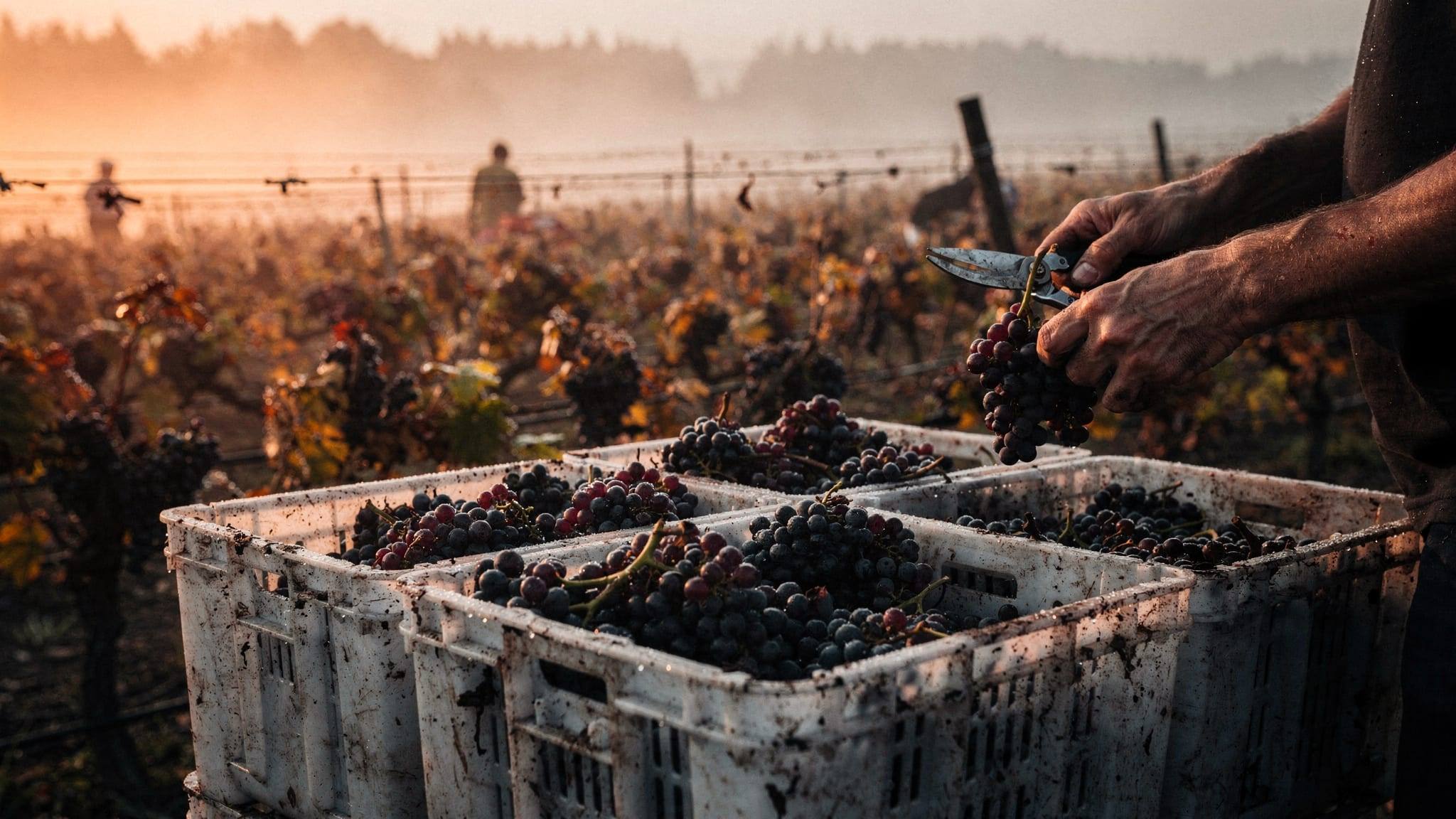
Each vineyard block keeps its own spray program and its picks. Fruit is weighed in at the crush pad against the block it came from, and that origin travels with every wine made from it. Picking inside a pre-harvest interval is stopped outright.
-
Winery production and cellar management
Crush and press runs keep their press fractions, a tank holds one lot at a time, and putting two together creates a blend that records its parents and proportions. The alcohol you measure is kept apart from the predicted figure and goes onto every bottled lot.
-
Barrel management for wineries
Every barrel carries a fill count that only rises, its ullage is noted before each top-up, and the top-up itself is traced like the small blend it is. Years in the barrel room become a record you can show, not something you remember.
-
Wine traceability, block to bottle
A bottled lot resolves to its vineyard blocks, vintage and varietal shares through every blend, and forward to each club member and account that received it. Start a mock recall from any lot and see what is still in the cellar.
-
Wine club and cellar door sales
Club tiers, members, allocations and release runs sit in the same order book as the cellar door and the boards. A release is an ordinary order, so the duty, deposits and tax on it are worked out the same way as on any other sale.
-
Wine excise duty
Wine falls under the Excise Act, 2001, which sets its own basis and its own moment for duty. Non-duty-paid and duty-paid wine are kept apart on a ledger beside your inventory, and each period is reconciled to the litre. You review and file.
A winemaker’s week, without the spreadsheet
The same work, without the re-keying.
-
Before Harvest weights on a clipboard at the crush pad
With BrewCraft Grape intake recorded against the block it came from
-
Before Blend percentages rebuilt by hand for the label
With BrewCraft Varietal and vintage composition carried through every blend
-
Before Club releases assembled in a separate system
With BrewCraft Releases that become ordinary orders, with duty, deposits and tax following
-
Before Barrel inventory on a whiteboard
With BrewCraft Every barrel, its fill and its top-ups on the record
See it move
From the block to the bottle.
-
01
Vineyard
Pinot Noir from Block 3 and Block 5, picked and weighed in against the block each harvest lot came from: HV-2025-0917 and HV-2025-0921.
-
02
Crush and press
Pressed into lot TM-2025-PN04, with the yeast, sulphite and fining agent that went into it recorded against the lot.
-
03
Barrel room
Fills and top-ups recorded barrel by barrel, so the lot’s history in oak is measured rather than remembered.
-
04
Bottling and club
1,980.0 L into 2,400 bottles and 120 magnums, which is when duty is imposed. Then out to the board, the cellar door and a 720-bottle club release.
Illustrative figures from Twenty Mile Wines, a fictional producer.
Every lot, traced to its source and its customer.
Suspect lot
MF-2609-I · Isinglass fining agent
Went into batch TM-2025-PN04. The other four inputs are not implicated and stay out of the recall.
-
FG-2026-0904 · 2,400 × 750 mL bottles
- Provincial board order 1,440 bottles
- Wine club release 720 bottles
- On hand 240 bottles
-
FG-2026-0905 · 120 × 1.5 L magnums
- Cellar door 48 magnums
- On hand 66 magnums
- QC retention 6 magnums
Illustrative figures from Twenty Mile Wines, a fictional producer.
The rules that apply
Wine duty, under its own statute
Wine is charged per litre under the Excise Act, 2001, and duty is imposed when the wine is packaged. It is payable then too, unless the wine goes straight into an excise warehouse — in which case it is not payable until it is removed. BrewCraft keeps imposition and payment apart, and non-duty-paid and duty-paid wine apart on a ledger parallel to your inventory, including exports and the other cases where the Act provides relief.
| The wine | Duty imposed | Duty payable |
|---|---|---|
| Bulk wine | When it is taken for use | At the same moment |
| Packaged wine | When it is packaged | At packaging |
| Packaged wine, straight into an excise warehouse | When it is packaged | When it is removed from the warehouse |
What you get
Also built for wineries.
-
Release gates, not status flags
Nothing is allocated, shipped or sold without a quality release. Put a batch on hold and the hold reaches every lot made from it — including the ones already packaged.
-
Markups, deposits, eco fees and sales tax
Provincial board markups, container deposits, stewardship fees and GST, HST, PST or QST are kept as four separate amounts with four separate payees — the way your accountant needs them, for each province and territory where they apply.
-
Several sites, several licences, one account
A brewery with a satellite taproom, a winery with a cidery licence, a group of associated producers — each licence kept separate where the law says it must be, and seen together where you want it to be.
-
The true cost of every batch
Materials at landed cost, packaging, and the litres that never became product — loss is a cost, not a rounding error. Duty is recognised as part of cost when it becomes payable.
-
Routes, proof of delivery and empties
Pick, load and deliver on a route, capture proof of delivery at the door, and bring the empties back against the deposit they carry.
-
Switch over without retyping — or guessing
Bring your records in from a spreadsheet through the BrewCraft import template. Every row is staged and decided by a named person, nothing the file does not establish is defaulted, and each record keeps the file and row it came from.
Questions
What winemakers ask us.
- Can I track barrels by lot?
- Yes. Each barrel is a record of its own, holding the wine it was filled with, a fill count that only rises and the ullage measured before every top-up, and each top-up is recorded as a small blend so the trace survives it.
- When does wine excise duty become payable?
- Duty on packaged wine is imposed at packaging and is normally payable then. If the wine goes straight into an excise warehouse, payment waits until the wine is removed.
- Can BrewCraft check a varietal or vintage claim on a blend?
- Yes. A blend carries the varietal and vintage make-up of every wine that went into it, so the claim on the label can be checked against the record.
- Does it run a wine club?
- Yes. Club tiers, members and allocations are set up once, and each release run becomes ordinary orders, so duty, deposits and tax are handled as for any other sale.
Support
Help with the software, and help with the excise.
We reply within 24 hours on business days (Monday to Friday, excluding statutory holidays).
-
Technical support
-
Accounting and excise support
Accounting and excise support backed by government-side excise experience.

Private beta · Limited places
Bring your winery into the private beta.
We are onboarding a limited number of Canadian breweries, wineries, cideries, meaderies and distilleries. Early partners get a named person who answers, beta pricing held for twenty-four months, and a real say in what ships next.