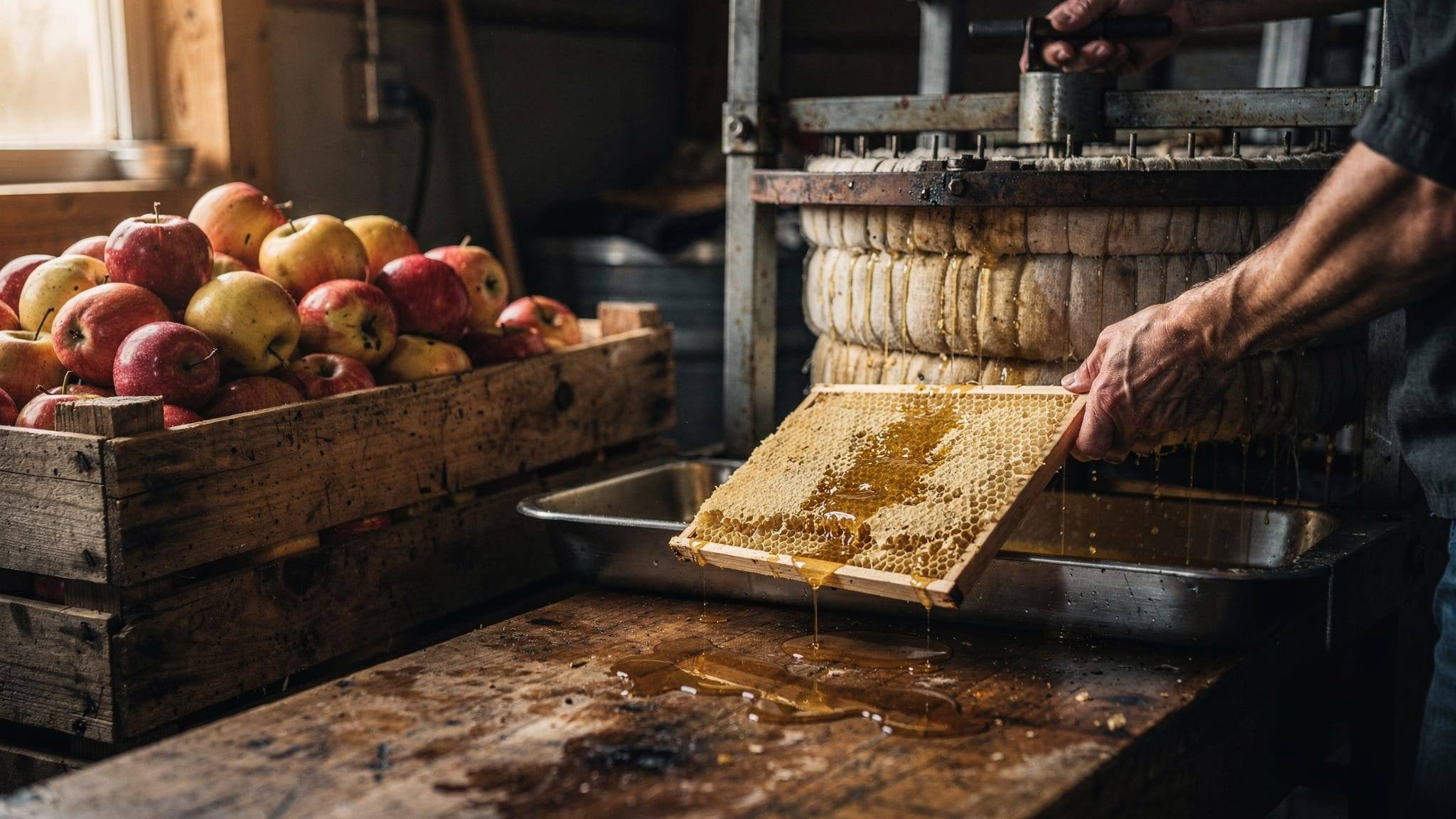
Cidery and meadery software · Canada
Federally, cider and mead are wine. BrewCraft already knows it.
Classed as wine federally, and treated differently from one province to the next. BrewCraft models both, so you are never forced to pretend to be a brewery or a winery.
What it covers
Cidery and meadery software, area by area
BrewCraft is cidery and meadery software for Canadian producers, from the orchard or apiary lot to the bottle. It keeps one order book across every channel you sell through: provincial boards, private retail, licensees, your taproom, farmers’ markets and direct-to-consumer, with a club if you run one — each with its own listing, pricing and paperwork.
-
Cidery and meadery production
Pressing, fermentation, transfers and packaging are recorded tank to tank, and each step names the litres it lost. Combining two tanks makes a blend with its parent batches and their shares written down, so neither the volume nor the trace is ever estimated.
-
Fruit and honey lot tracking
Apples, pears, other fruit and honey come in as lots with their paperwork and measured values attached. Every bottle traces back to the orchard or apiary lots in it and forward to each customer who bought it.
-
Cider and mead excise duty
Federally, cider and mead are wine under the Excise Act, 2001, and BrewCraft keeps them on the wine side of the duty ledger instead of bending a beer model to fit. Each period reconciles to the litre, and you review and file.
-
Provincial rules for cider and mead
Provinces do not class cider the same way. Board markups, container deposits, stewardship fees and sales tax are kept per province and per container, as separate amounts with separate payees.
-
Cidery taproom, markets and club sales
Pours in the taproom, sales at the farmers’ market, online orders and a cider or mead club all go into one order book, beside the board and licensee orders, with each club release handled as an ordinary order.
A cidermaker’s week, without the spreadsheet
The same work, without the re-keying.
-
Before Orchard and apiary lots tracked in a notebook
With BrewCraft Every fruit and honey lot traced into the tank
-
Before A brewery system that calls your cider “beer”
With BrewCraft Cider and mead modelled as what they are
-
Before Taproom, farmers’ markets and online sales in three places
With BrewCraft One order book across every channel
-
Before Deposits and eco fees worked out per container by hand
With BrewCraft Deposits and stewardship fees kept per container and province
See it move
Every lot, traced to its source and its customer.
Suspect lot
FL-2609-S · Northern Spy apples
Went into batch KCC-2026-009. The other four inputs are not implicated and stay out of the recall.
-
FG-2026-0812 · 4,800 × 355 mL cans
- Provincial board order 2,880 cans
- Private retail 1,908 cans
- QC retention 12 cans
-
FG-2026-0813 · 1,200 × 750 mL bottles
- Taproom 240 bottles
- Direct to consumer 600 bottles
- On hand 360 bottles
Illustrative figures from Kettle Creek Cider House, a fictional producer.
The rules that apply
How cider and mead are classed
Under federal excise law, cider and mead are classed as wine, and BrewCraft records the origin of every fruit and honey lot. The provinces do not agree with each other: some treat cider as a refreshment beverage, others as wine. BrewCraft applies the right rule at each level, so you are never forced to pretend to be a brewery or a winery.
| The wine | Duty imposed | Duty payable |
|---|---|---|
| Bulk wine | When it is taken for use | At the same moment |
| Packaged wine | When it is packaged | At packaging |
| Packaged wine, straight into an excise warehouse | When it is packaged | When it is removed from the warehouse |
What you get
Also built for cideries & meaderies.
-
Mock recalls you can run any afternoon
Start from a suspect lot and get the full picture: which batches, which finished lots, which customers, and what is still on hand. Practice for your recall plan, long before you ever need it.
-
Release gates, not status flags
Nothing is allocated, shipped or sold without a quality release. Put a batch on hold and the hold reaches every lot made from it — including the ones already packaged.
-
Measured ABV, kept apart from the prediction
The ABV you measure and the ABV the recipe predicts are separate figures, and neither overwrites the other. The measured value is the one carried onto every packaged lot.
-
Packaging runs that close on the litre
Cans, bottles and kegs come off the line as finished lots with a date code, and line waste is recorded in the same step — the run reconciles before it closes.
-
The true cost of every batch
Materials at landed cost, packaging, and the litres that never became product — loss is a cost, not a rounding error. Duty is recognised as part of cost when it becomes payable.
-
Several sites, several licences, one account
A brewery with a satellite taproom, a winery with a cidery licence, a group of associated producers — each licence kept separate where the law says it must be, and seen together where you want it to be.
Questions
What cidermakers ask us.
- Is cider taxed like beer or like wine?
- Like wine. Cider and mead fall under the Excise Act, 2001, the same statute as wine, so BrewCraft keeps them on the wine side of the duty ledger.
- Can I record where each fruit or honey lot came from?
- Yes. Every delivery of apples, pears or honey becomes a lot with its supplier and its paperwork attached, and that lot stays linked to every batch it went into.
- Can one account hold both a cidery and a meadery licence?
- Yes. Each licence keeps its own records where the law requires it, and you see the whole operation together when you want to.
Support
Help with the software, and help with the excise.
We reply within 24 hours on business days (Monday to Friday, excluding statutory holidays).
-
Technical support
-
Accounting and excise support
Accounting and excise support backed by government-side excise experience.
Private beta · Limited places
Bring your cidery or meadery into the private beta.
We are onboarding a limited number of Canadian breweries, wineries, cideries, meaderies and distilleries. Early partners get a named person who answers, beta pricing held for twenty-four months, and a real say in what ships next.