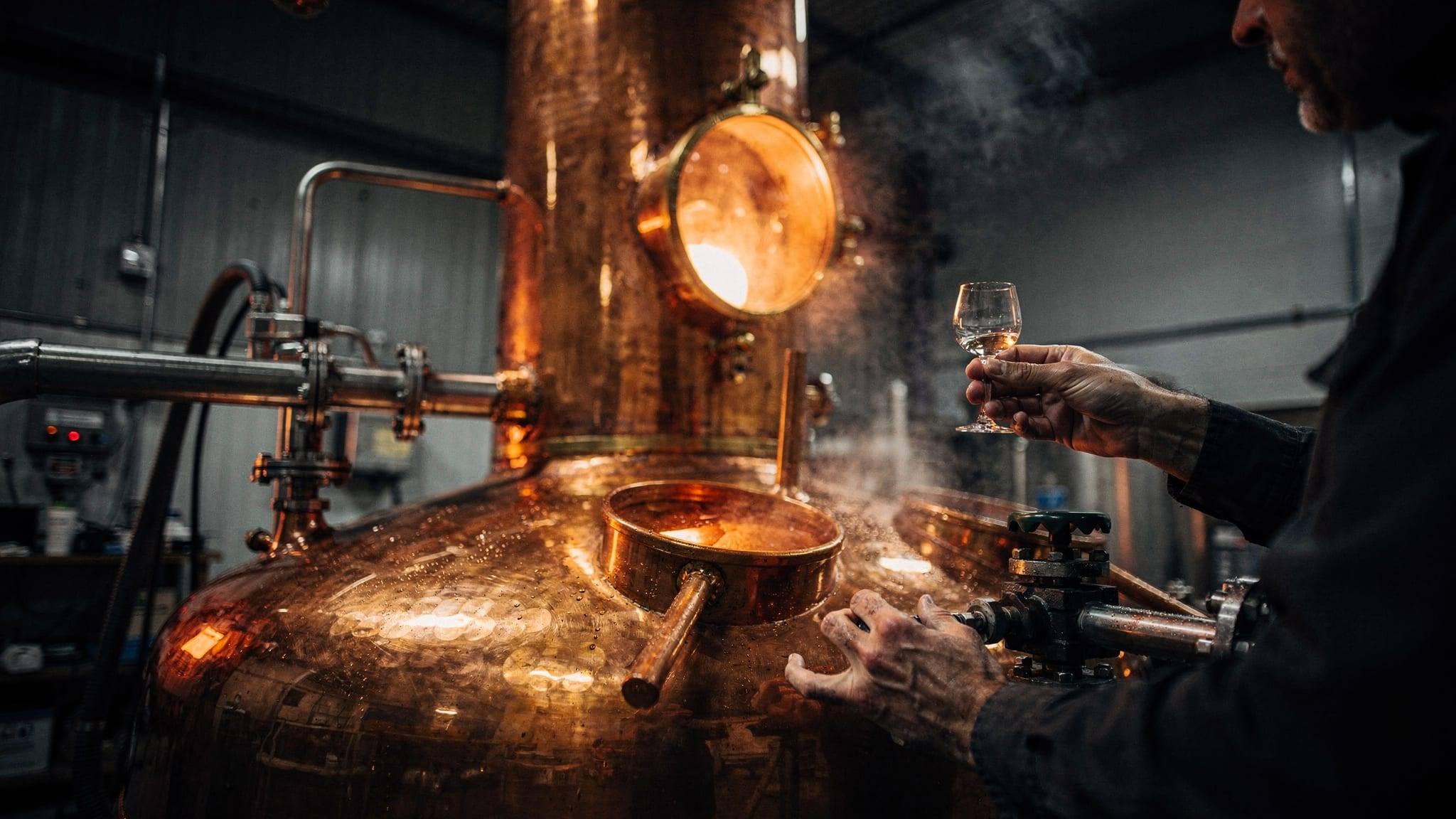
Craft distillery software · Canada
Grain to glass, cask to case — on one record.
Mash bills, barrels, bottling runs, the tasting room and every provincial board order — traced end to end and costed, without a separate spreadsheet for each.
What it covers
Craft distillery software, area by area
BrewCraft is craft distillery software for Canadian distilleries, from the grain and botanical lots to the case. It keeps one order book across every channel you sell through: provincial boards such as the LCBO, the SAQ, the BC Liquor Distribution Branch and AGLC; private retail; licensees; your tasting room; and direct-to-consumer — each with its own listing, pricing and paperwork, and a licensee order stopped when the customer’s licence has lapsed.
-
Distillery inventory management
Grain, botanicals, bottles and closures are bought on purchase orders and received as lots, costed with freight and brokerage included. Stock on hand comes from a ledger of movements, so every figure can explain how it got there.
-
Barrel tracking for distilleries
Each cask keeps a history that never resets: how many times it has been filled, what went into it and when. The barrel room is a record, not a spreadsheet only one person can read.
-
Distillery lot traceability
A finished bottle resolves to the grain and botanical lots behind it and forward to every account that received it. A mock recall starts from any lot you are worried about and shows what is still in the warehouse.
-
Distillery costing
What a bottle costs is built from landed material cost, packaging and the volume that never reached a bottle, so recorded loss shows up as cost instead of vanishing into a rounding line.
-
Distillery sales: boards, retail and the tasting room
Board orders, private retail, licensees and tasting-room sales share one order book, with markups, deposits, stewardship fees and sales tax kept as separate amounts for each province you sell in.
A distiller’s week, without the spreadsheet
The same work, without the re-keying.
-
Before Barrel records in a spreadsheet nobody else can read
With BrewCraft Every barrel and its contents on the record
-
Before Grain and botanical lots lost at the still
With BrewCraft Every raw-material lot traced to the bottle
-
Before Board orders, private retail and the tasting room reconciled by hand
With BrewCraft One order book across every channel
-
Before Guesswork on what a bottle costs
With BrewCraft Batch cost from landed material cost and recorded loss
See it move
Every lot, traced to its source and its customer.
Suspect lot
ML-2610-A · Canadian 2-row pale malt
Went into batch KC-2026-014. The other four inputs are not implicated and stay out of the recall.
-
FG-2026-0781 · 4,800 × 473 mL cans
- Provincial board order 2,880 cans
- On hand 1,908 cans
- QC retention 12 cans
-
FG-2026-0782 · 12 × 50 L kegs
- Licensee 8 kegs
- Taproom 2 kegs
- On hand 2 kegs
Illustrative figures from Kettle Creek Brewing Co., a fictional producer.
Shown for a brewery. Lot tracing works the same way for every product class, from the input lot to the customer.
The rules that apply
Spirits, shaped with the distillers who make them
Spirits are the newest product class in the BrewCraft beta. Materials, barrels, inventory, traceability, sales channels and the provincial layer work for a distillery the way they work for every producer. The spirits duty ledger — its absolute-alcohol basis, proofing and cuts — is being built with our founding distillery partners.
If you distil, this is the moment to have a say: founding distillery partners shape how spirits land in BrewCraft.
What you get
Also built for distilleries.
-
Packaging runs that close on the litre
Cans, bottles and kegs come off the line as finished lots with a date code, and line waste is recorded in the same step — the run reconciles before it closes.
-
Available, not just on hand
What you can sell is what is on hand less what is allocated, held or reserved, and it never goes below zero. Every movement carries its reason and the event behind it, so a number that changed can always say why.
-
The oldest lot used first, unless you say why
Lot-controlled materials are drawn first-expiring, first-out. Reaching past the oldest lot is allowed, and the reason is recorded with it.
-
Routes, proof of delivery and empties
Pick, load and deliver on a route, capture proof of delivery at the door, and bring the empties back against the deposit they carry.
-
An audit trail that cannot be edited
Every change to a record that matters is kept, append-only, with who made it and when — the evidence behind a return, a recall or a board query.
-
Switch over without retyping — or guessing
Bring your records in from a spreadsheet through the BrewCraft import template. Every row is staged and decided by a named person, nothing the file does not establish is defaulted, and each record keeps the file and row it came from.
Questions
What distillers ask us.
- Does BrewCraft handle spirits excise duty?
- That is the piece we are building with our founding distillery partners: the spirits duty ledger, on its absolute-alcohol basis. Material lots, barrels, stock, board orders and the tasting room run on the same records every BrewCraft producer uses.
- Can I sell through the provincial boards and my own tasting room?
- Yes. Board, private retail, licensee and tasting-room sales share one order book, and a licensee order is stopped if that customer’s licence has lapsed.
- Will it work with my accounting?
- BrewCraft builds journals for cost of goods, inventory value and deposits against your own chart of accounts, mapped with you at onboarding.
Support
Help with the software, and help with the excise.
We reply within 24 hours on business days (Monday to Friday, excluding statutory holidays).
-
Technical support
-
Accounting and excise support
Accounting and excise support backed by government-side excise experience.
Private beta · Limited places
Bring your distillery into the private beta.
We are onboarding a limited number of Canadian breweries, wineries, cideries, meaderies and distilleries. Early partners get a named person who answers, beta pricing held for twenty-four months, and a real say in what ships next.